After years of playing the lottery ourselves, we've pulled together the tricks and finer points that actually matter — the details that separate a win from a loss.

You've probably heard people say anyone can win the lottery, and that's the plain truth. The odds are spread evenly across every participant, and each one has a real shot at the jackpot. Put simply, it can happen to any player. Winning — or losing — doesn't require a college degree or wealthy relatives; all it takes is a bit of belief in luck and a genuinely lucky streak. If we're being honest, luck alone is really what drives us to buy a ticket in the first place. Some people win on their very first purchase, while others buy tickets faithfully for years before their persistence finally pays off — and when it does, it pays off big.
So let's get into the tricks and finer points we mentioned. Below, you'll find answers to questions like these, along with practical tips for playing the lottery.
- What do researchers say about lottery outcomes, and how would they build a strategy?
- What's the point of buying a lottery ticket in the first place? Why bother?
- Are there lotteries where people genuinely win?
- What are the most popular methods for winning the lottery?
- Are there real chances of winning? What should you know?
- Main types of lotteries and their features
- 12 systems for winning the lottery
- System #1. Play against the crowd
- System #2. Random number generator
- System #3. The Delta method
- System #4. Lucky numbers
- System #5. Pool your money with other players
- System #6. Play, play, and win
- System #7. Stick with the same combination
- System #8. Go after rollover jackpots
- System #9. Bet the maximum
- System #10. Wheeling systems
- System #11. Believe in your luck
- System #12. Rituals and charms
- If nothing helps. What should you do?
- The most popular lotteries worldwide
- Can you actually win big money in the lottery?
- How to win at lotto-style games?
- Is there a tax on lottery winnings?
- Conclusions
Are there real chances of winning? What should you know?
There's no shortage of skeptics insisting that lottery operators pocket all the money and ordinary people never stand a chance. And right alongside them are the optimists who insist that literally anyone can win — no matter which lottery, no matter who's playing.
Worth repeating: anyone really can win the lottery, and every participant's odds are equal. Every player should keep in mind that lotteries run on probability theory, and it's exactly that theory that ultimately lets people win — regardless of which ticket they hold.

Always keep the "long run" in mind. It's a term that reflects a simple fact: you can play the lottery as much as you like, but there's a fixed stretch of time between when you start playing and when a win — or loss — actually happens. That stretch is exactly what keeps frequent wins from happening. As you've probably already gathered, it doesn't matter whether you play a little or a lot — your overall odds stay the same. So there's no point burning through your time playing constantly; it's better to be patient and simply wait for the results.
We all know people who put a lot of stock in "mystical" thinking. It's not a mainstream topic, but it's worth a mention. Before playing the lottery, some players reach for lucky charms, perform little rituals, recite specific incantations, or put their faith in amulets. When we play the lottery, we're really taking part in a precise mathematical process. Believing you'll win doesn't hurt, though — a cheerful, optimistic outlook tends to serve people better than gloomy pessimism, if only because it keeps you playing and enjoying it.
It's also worth remembering the online lottery exchanges where you can play a huge range of lotteries, including international ones. Foreign lotteries are naturally pricier. But if you happen to win one of the American lotteries paying out in dollars, or a European one paying in euros, you'll be sitting on a genuinely large sum.
One of the best-known of these exchanges is theLotter. The service is so smooth that you'll barely notice the difference from buying a ticket in person. Through theLotter you can play the lottery without leaving home and still walk away with serious money, since the platform only lists legitimate games where players win real prizes — and not small ones, either. Take the case of a player from just outside Moscow who, in a recent year, won a foreign lotto game — specifically, the Austrian lottery. The prize came to €824,000, and the lucky winner chose to stay out of the spotlight, declining to show his face on camera or give many interviews.

That win says a lot about theLotter's quality. And its most important credential is its track record: it's been in business since 2002, and in that time theLotter has weathered plenty of changes — not just in design, but in how it operates behind the scenes.
Scientific research on lotteries
From the moment lotteries appeared, people started studying them, running research and building mathematical strategies to try to win. Scientists and mathematicians wanted to uncover a numerical pattern that a player could use to calculate the right numbers and build a genuine winning strategy — one that, over time, would deliver ever-larger sums. Unfortunately, all that research and all those calculations came back with the same verdict: lottery outcomes are evenly distributed, with no hidden scheme rigged to cheat players. Lottery players are left simply hoping for good luck. Here's what the research actually shows:
- Every player's number comes up with equal probability;
- There is no way to predict or guess lottery numbers in advance;
- It's impossible to develop a fixed, reliable winning strategy for the lottery.
In other words, scientists conclude that winning the lottery really does come down to chance: you pick your numbers, wait for the results, and hope luck is on your side. But researchers haven't given up. Studies continue to this day, and so far nothing's turned up. Psychologists have also joined mathematicians and statisticians in this field, studying human behavior and how people think about numbers. Every psychologist working on lottery behavior starts from how a player actually thinks, and tracking that thinking — their actions and reasoning — is their entire job.
Psychologists have found that the more players who pick the same numbers, the smaller the eventual prize — and their odds of winning at all also shrink. So the smart move is to choose a combination other players tend to avoid; if you do win, your payout will be bigger. In other words, the game isn't really against the lottery operator — it's against your fellow players, your real competitors. To win, you need to understand how the average player picks numbers, and then deliberately avoid doing the same. It pays to break away from the usual habits and pick numbers other people overlook, since that's what leads to a bigger prize.
Main types of lotteries and their features
The gambling market today offers an enormous range of lotteries. Beginners can understandably feel a little lost given the sheer variety. Our main advice: stick with the most popular, large-scale lottery games.
Let's be clear up front: there's no hidden secret to any lottery game. So if you come across an offer to buy a "secret, guaranteed" winning strategy, don't rush to buy it. There's a good chance it's simply a scam. You'd be better off spending that money on another lottery ticket. Broadly speaking, all lotteries fall into two categories:
Instant lotteries
Without a doubt, this is the simplest kind of lottery game. The idea is straightforward: you scratch off a covered panel on the ticket. If you've won, you'll see the corresponding message. There are other formats of instant lotteries too — for instance, some just require tearing off a small section of the ticket. In most cases, if luck is on your side, you can collect your prize right on the spot, at the same place you bought the winning ticket. That said, for larger sums you may need to contact the lottery organizer directly.
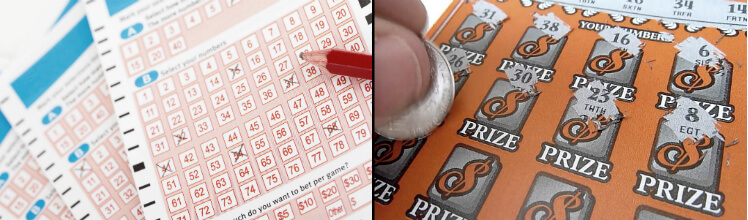
Draw-based lotteries
This is probably the most widespread type of lottery, and it splits roughly into two categories. In the first, the player picks their own combination of numbers. In the second, the player buys a pre-printed ticket with a unique number already assigned.
Worth calling out separately are the smaller, local promotional drawings — essentially raffles. In practice these tend to be one-off events, organized by companies for specific marketing goals. More often than not, the prize isn't cash but merchandise. That said, experienced players tend to recommend not skipping these: because the pool of participants is limited, your odds of winning are actually pretty solid. The real question is whether you actually need, say, a clothes dryer.
Pros and cons of instant and draw-based lotteries
Instant lotteries have a few clear advantages:
- You know the result immediately;
- You can collect a small prize on the spot;
- You can buy tickets online;
- The tickets tend to have eye-catching designs.
But instant lotteries have their downsides too:
- Losing a winning ticket means losing the prize;
- You can't choose your own number combinations;
- Prizes tend to be modest;
- There's no shortage of shady operators.
You can improve your odds by sticking to tickets from established, reputable operators. It's also worth tracking published payout statistics to see which lottery pays out the most. Before buying, check the back of the ticket for the organizer's details and the drawing dates to confirm it's genuine.

Advantages of draw-based lotteries:
- Large jackpots that build up thanks to a big player base;
- A huge variety of draw-based lotteries to choose from;
- You can play solo or as part of a syndicate;
- You can pick your own numbers or use a quick-pick option.
Disadvantages of draw-based lotteries:
- With so many possible numbers, matching more than two or three is tough;
- You have to wait for the next drawing.
12 systems for winning the lottery
Why does one person win the lottery and another doesn't? You don't need wealthy parents, multiple degrees, or the budget to buy 200 tickets every drawing. Winning takes a strategy — and everyone's is a little different.
The internet is full of different strategies and methods. Some experts recommend playing numbers tied to your birthday, others swear by picking numbers completely at random, and still others offer up elaborate mathematical formulas for finding "winning" combinations. Even so, a few methods genuinely can improve your odds. None of these are secret, and it's entirely possible one of them will actually work for you.
System #1. Play against the crowd
One approach is to pick unpopular numbers — the ones other players choose least often. When a commonly-picked number comes up, the prize gets split among a large group of winners. But when a rarely-picked number hits, you can win a lot more, simply because far fewer people are sharing the prize pool. Splitting a jackpot two ways beats splitting it 100 ways, or more.
You could call this method "Don't follow the herd." It leans on the same psychology we touched on earlier. Take all the numbers you're choosing from and split them into three groups. The key insight is that most players gravitate toward numbers in the first 70% of the available range. As a simple example: if a lottery's numbers run from 1 to 40, most players will pick numbers somewhere in the 1–30 range.
There's nothing mysterious about why. Most lottery players pick numbers tied to meaningful dates in their lives — birthdays, most often. Since no month has more than 31 days, numbers above 31 get picked far less often when people fill out their tickets. That's a real edge worth using. It's also worth remembering that if the winning numbers happen to fall above 31, the prize tends to be considerably larger, simply because fewer players bet on those numbers in the first place.
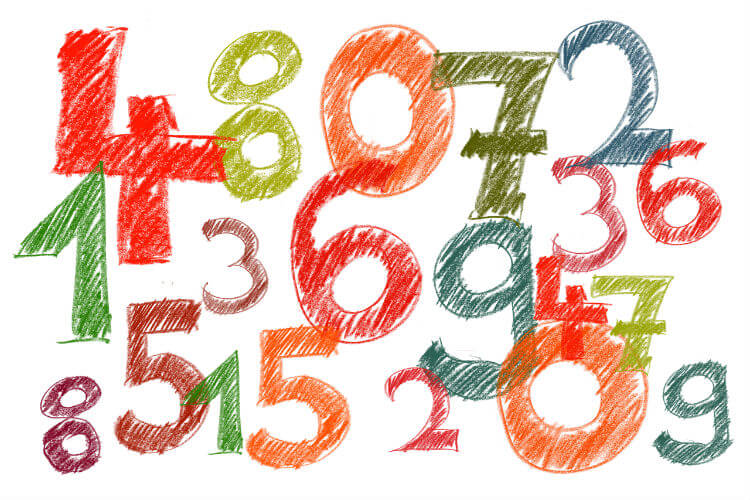
So which numbers are unpopular? It helps to look at the numbers players pick most often:
- Numbers 1 through 31 get picked far more than others, because people believe in the "magic" of their birth date. Since there are 12 months and no month runs past 31 days, those are exactly the numbers people gravitate toward;
- The next most popular numbers are the ones people consider inherently lucky. Many people favor the number 1 simply because it's first, and 7 because it's traditionally seen as lucky. The numbers 3 and 5 are close behind on that list too;
- Unpopular numbers include 6 (because 666 is associated with the devil) and 13 (thanks to widespread superstition);
- Odd numbers get picked noticeably more often than even numbers;
- There's no need to only pick numbers that are close together on the ticket, the way many players do — a winning combination can come from anywhere on the grid, horizontally, vertically, or diagonally;
- In two-digit numbers, the second digit tends to land below 5 more often — so numbers like 31, 42, and 54 come up more often than 29, 37, and 46.
If you want to improve your odds, picking less popular numbers on your ticket is a solid place to start.
System #2. Random number generator
Here's another straightforward method for playing the lottery. It suits anyone who'd rather not spend time and mental energy crunching numbers. A random number generator can't guarantee anything, but the odds of winning are always there regardless. Statistics suggest that around 75% of tickets are filled out using a random number generator — and roughly 75% of winning tickets come from that same group.
You can generate a number combination a few different ways: use a free online tool, or simply ask the clerk at the point of sale to do a quick-pick for you. Basically, you're putting your full trust in chance — and not every player is comfortable with that. This method has become fairly popular among newcomers and casual online lottery players, though seasoned players tend to prefer more deliberate "systems."
System #3. The Delta method
If you want to try this strategy, be prepared — it's not the easiest one out there. Players consider it the most convoluted of the bunch. The Delta method suits mathematicians or dedicated number enthusiasts who aren't fazed by tricky calculations. Most people have to read the rules several times just to grasp the basic idea. So before committing to the Delta method, take an honest look at your own math skills. Otherwise you risk wasting a lot of time without ever quite figuring it out — a single small mistake can throw off the whole result.
How does it work? The player picks:
- One small number (from 1 to 3);
- Two mid-sized numbers (from 4 to 7);
- One medium number (from 8 to 10);
- Two large numbers (from 11 to 15).
Write those numbers down. Say a player picks: 2, 4, 6, 9, 12, 14. Now shuffle them into a random order. Let's say we get: 9, 14, 4, 6, 2, 12.
The first number (9, in our case) is the "delta" number. It becomes the first number in our lottery combination. Next, add the first two numbers together: 9+14=23. Keep adding each subsequent number to the running total, recording the result each time (23+4=27, 27+6=33, 33+2=35, 35+12=47). The final combination is: 9, 23, 27, 33, 35, 47. Check that the last number doesn't exceed the highest number in your lottery's range. Naturally, "47" shouldn't go over that limit. If it does, start the calculation over using different numbers.
System #4. Lucky numbers
Sometimes a player has no idea which numbers to pick. In that case, many people fall back on a birthday, another meaningful date, or their age. You could also use numbers that seem to "follow" you through life in a positive way — your personal lucky numbers. Why not put your luck to the test that way?
System #5. Pool your money with other players
This is about forming a group of players who pool their money to buy a large batch of tickets, then split any winnings according to how much each person contributed. The advantage is obvious: you can place much bigger bets while each individual player only puts in a relatively small amount. That makes sense, since buying more tickets always raises your odds of winning. Pooling players together also covers a much larger share of the possible number combinations.

That said, if you decide to team up with other players (these groups are known as lottery syndicates or pools) and buy a large batch of tickets, make sure everyone in the group agrees in advance that whichever ticket wins, the prize gets divided based on how much money each participant put in.
If you're a fan of group play, here are a few rules worth following:
- never cover a friend's share out of your own pocket;
- never borrow money to buy in;
- never bring someone into the group with the intent to cheat them;
- steer clear of chronically pessimistic players in your group.
Staying positive genuinely matters here. Any game, including playing the lottery, should be fun. A well-known example of a successful group win: a syndicate of 41 people in London recently split a million-dollar prize. There are plenty of other success stories out there too, of groups of players landing substantial sums together.
System #6. Play, play, and win
Without question, the simplest method of all: keep playing over a long stretch of time without putting in much effort. The idea is to fill out as many tickets as possible, enter as many drawings as you can, and just wait for the results to come in. The upside is you don't need to keep dreaming up new strategies for every single drawing — all that's required is patience while you wait for your chosen numbers to hit.
System #7. Stick with the same combination
You don't have to rack your brain coming up with a fresh combination every drawing. Instead, spend real time analyzing and settling on one solid "lucky" combination — then keep playing those same numbers every time. All that's left is waiting for the right combination to come up. Experienced players know it pays to keep track of past winning numbers and rule those out going forward. The odds of the exact same five-or-more-number combination coming up twice are close to zero.
System #8. Go after rollover jackpots
If you're a regular lottery player, never skip a rollover drawing where a substantial jackpot has built up. What exactly is a rollover drawing? It's when a prize that's accumulated over several drawings finally gets paid out — sometimes split among several winners. How often these happen depends on the operator's rules, though by law they typically must occur at least once a year. A rollover drawing significantly boosts the size of the eventual prize. In practice, the players who end up genuinely wealthy are often the ones who took part in these rollover drawings. And the jackpot itself can reach almost unbelievable sums, all while the underlying odds of winning stay exactly the same. In other words, a player can walk away with a massive payout for the same ticket cost as any other drawing.
System #9. Bet the maximum
This one relies on what's called a "system bet" — a bet that covers not just one but several number combinations at once on the playslip. This approach is common in online lotteries and works similarly to the random number method. A ticket with this kind of expanded bet costs noticeably more, but your odds of winning something go up considerably in exchange.
System #10. Wheeling systems
This method — often called a wheeling system — helps boost your odds of winning and organizes your bets so a single drawing can produce more winning combinations. It's a way of covering as many possible combinations as you can from a limited pool of numbers, letting you combine a large set of numbers using relatively few actual combinations.
System #11. Believe in your luck
This one might just be the most effective of all. If you genuinely believe in something, it has a way of coming true. Thoughts have real power. If you go in convinced you'll never win, chances are you never will. The saying goes that to become a millionaire, you first need to feel like one. It all starts with mindset. Believe a bit of magic is possible, and it just might happen. There's plenty written on the power of positive thinking and manifestation if you want to dig deeper into how it's supposed to work. When you buy a ticket, don't tell yourself "I'll lose like always." Believe luck is on your way — it might even be today.
System #12. Rituals and charms
One more path to a big lottery win, according to folk tradition: a powerful charm or a special ritual said to help make a dream come true! These rituals typically follow certain conventions — the right time and place, and careful attention to every step (we cover the details in a separate article on lucky lottery charms). You're meant to picture the prize you want in vivid detail, and, just as important, hold onto a genuine feeling of confidence. Believers in this tradition recommend keeping the ritual completely private, so as not to invite bad energy toward your intentions. Gossip, speculation, and unsolicited advice from "well-wishers" don't help either — so it's best to keep your ritual to yourself. Keep in mind this is folk superstition and entertainment, not a factual method for beating the odds of a licensed lottery drawing.
If nothing helps. What should you do?
Do daydreams about winning the lottery start to feel like an obsession you can't shake? That's a sign it's time to step back and change something. Remember that playing the lottery should be an enjoyable pastime — never a source of stress. Here's some simple advice for anyone caught up in wondering "why haven't I won yet."
Stop obsessing over winning
First, let go of the frustration that comes from not winning yet. Every single day — sometimes every hour — huge numbers of people around the world buy lottery tickets. Every one of them has a genuine shot at a win. It's just that luck arrives instantly for some, while others wait years for their moment. Players who don't see quick results often slide into disappointment, which really isn't the right mindset. Better to treat it lightly: buy your ticket, pick your numbers, spend a moment hoping for good luck, then get on with your day. Let go of negative thoughts and any sense of desperation.
Trust chance a little more
People who've won lotteries often talk about how their winning ticket came to them almost by accident — handed over as change at a store, or picked up on a whim. The lesson is simple: if you're ever offered the chance to buy a lottery ticket with your change, or you end up with the last ticket a vendor has left, don't pass it up. It might just be a sign of good luck heading your way.
A word of advice: don't attract bad luck by repeating phrases like "I never win" or "I have no luck." Focus on positive thoughts instead of constantly bracing for another loss.
The most popular lotteries worldwide
Some of the most widely played lottery games around the world include national number lotteries, keno-style games, housing lotteries, and classic lotto-style drawings.

Every one of these lotteries has produced genuinely massive, multimillion-dollar wins over the years. They regularly build up substantial jackpots, and rollover drawings with huge super-prizes are common.
As for well-known international lotteries, the US has Powerball and Mega Millions, while Europe has EuroJackpot and EuroMillions. Nearly every foreign lottery tends to build up enormous jackpots over time. As of this writing, the jackpot in the American Mega Millions lottery stood at $174 million. Literally anyone can take part in this drawing — thanks to the internet, that's true for people in virtually any country in the world.
It's worth repeating that theLotter, which we covered earlier in this article, is a well-established and thoroughly vetted platform for taking part in drawings from many European and American lotteries. Right now, for instance, you could take part in the well-known EuroMillions lottery. Drawings happen every Tuesday and Friday, with players from nearly every European country taking part — France, Spain, Austria, Portugal, Switzerland, the UK, and more.
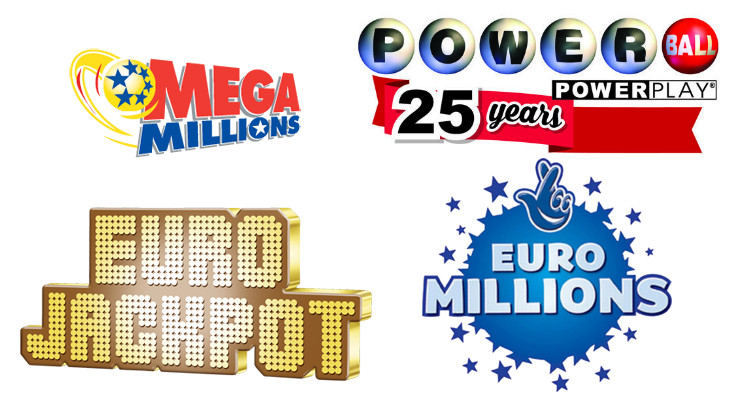
The prize fund is built from all the bets placed across nine participating countries, so the top prize starts at €17 million. If nobody hits the jackpot, it rolls over into the next drawing, and so on. Notably, the largest jackpot ever recorded in EuroMillions came in at around €180 million. And as for the American Powerball lottery, the record jackpot was set on January 13, 2016, at a jaw-dropping $1,500,000,000! It's easy to see why these enormous sums have made foreign lotteries some of the most popular and successful in the world.
Can you actually win big money in the lottery?
Winning a substantial amount of money in the lottery — hitting the jackpot, as people say — is possible for absolutely anyone who's bought a ticket. Personal luck, fortune, and maybe even a dash of intuition all play a role. Sometimes someone who's never played before buys a handful of random tickets and ends up a winner. More often, though, it goes the other way: people spend real money on tickets regularly, develop elaborate strategies, and crunch number combinations, only to win small consolation prizes — or nothing at all. Even so, the number of people who want to play the lottery keeps growing rather than shrinking. That's because playing the lottery is:
- Genuinely fun;
- A confidence boost — buying a ticket puts you in a positive mindset;
- A way to give back, since a portion of proceeds often goes to charitable causes;
- A real, if modest, chance at improving your financial situation.
Examples of real big wins
There's no shortage of real examples of massive lottery wins. And that's exactly how it should be — after all, if jackpots exist, then so do the players chasing them, and plenty succeed. Let's look at some of the biggest wins in lottery history, both international and domestic.
One of the largest domestic jackpots ever recorded went to a player who won a 6-from-45-style lottery, taking home a prize equivalent to several million dollars. The winner never revealed his "secret formula," saying only that every number he crossed off carried real meaning for him.
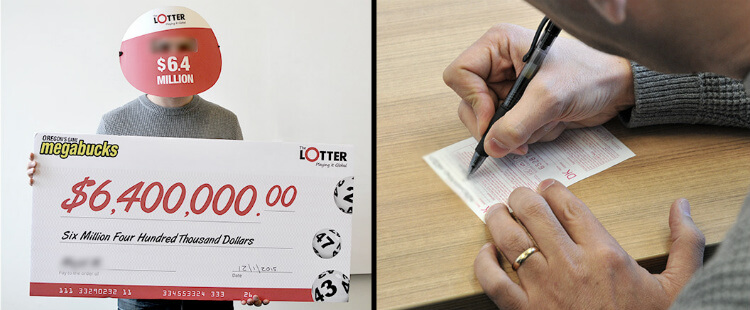
As for winners of foreign lotteries, one standout is a player from Iraq who won $6.4 million playing the Oregon Megabucks lottery. Media reports referred to him only by his initials, since he chose not to reveal his real name. What's especially notable is that he won through theLotter, buying American lottery tickets from the comfort of his own home in Iraq.
How to win at lotto-style games?
"What if I get lucky this time?" — that's the question on people's minds whenever they enter a lotto-style drawing, whether it's a classic number lotto or a housing lottery. Games like this are popular precisely because anyone can play, and no special skill is required. At its core, lotto is a commercial cousin of Bingo: you pick your numbers first, then check them against the numbers drawn.
The earliest lotto players date back to the 16th century, and the game first took off in sunny Italy. It caught on so quickly there that the government eventually had to ban it, since the gambling fever kept spreading. From there it gradually spread to neighboring European cities, picking up new rules with each iteration.
Thanks to its simple mechanics, lotto became one of the most widespread forms of lottery game anywhere, and researchers have tried for years to unpack all its finer details.
Financial analyst Joseph Granville is often credited as a pioneer of bingo strategy theory. According to his approach, to boost your odds of winning, a player should spread their numbers evenly across the playing field, keeping a roughly even mix of small and large numbers. The analyst also recommended balancing numbers divisible by two against those that aren't, along with balancing numbers that end in particular digits.
A more modern take comes from British statistician Leonard Tippett, who spent his career studying statistics. He argued that, given the total pool of numbers in play, it's best to favor numbers close to the midpoint of the range — the ones sitting closest to the middle of the full spread.
That said, neither researcher managed to build a truly reliable, universal winning strategy, since numbers are drawn in a genuinely random order, which tends to spread them evenly across the playing field. Those numbers rarely cluster in one particular spot.
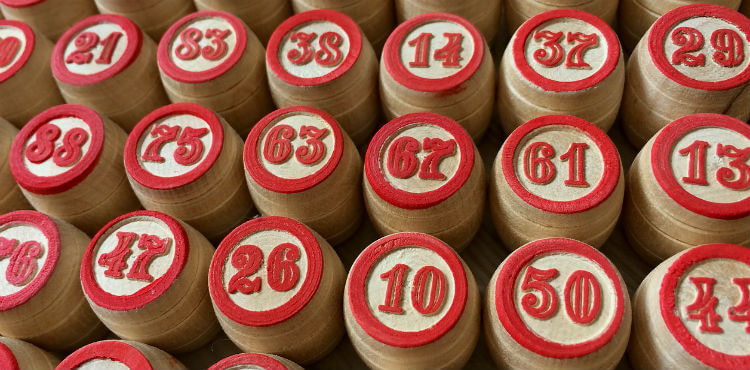
Even so, statistics show that popular lotto-style games can genuinely lead to a win. Rarely do all the numbers stay unclaimed drawing after drawing, which means somebody, somewhere, is winning fairly regularly. According to the numbers, it's often the third-, fourth-, or fifth-place player who ends up winning something. So how do you become one of those lucky players? What tactics actually help bring a win closer?
- Go into buying a ticket with a positive mindset, and believe you can win. Psychologists say that attitude really does make a difference;
- If your budget allows and you're eager to improve your odds, buy several tickets;
- Buy tickets together with friends — more tickets means better odds, though of course you'll need to split any winnings evenly;
- It's generally believed a ticket shouldn't repeat number patterns — the more varied your picks, the better;
- Play consistently, and don't skip drawings.
Players have come up with all sorts of other tricks over the years: writing custom software to calculate lucky combinations, working out a lucky number through numerology, consulting astrologers, or performing rituals. So what actually leads to success? Honestly, any strategy can work — what matters most is genuinely hoping for, and believing in, your win.
One lucky winner of several million once bought a batch of tickets for a single lotto drawing — a couple of standard tickets plus two sets of four, marking combinations of numbers up to 90 on each. One of the tickets turned out to be a winner, and just like that, she became a homeowner. It took her a moment to fully register what had happened — that she'd actually won the lottery. Her advice: never give up hope, because thoughts really can shape outcomes.
Is there a tax on lottery winnings?
Yes, there generally is. Tax authorities rarely let a windfall like this slip by untaxed, since a lottery prize counts as income for the winner. Most countries have a fairly straightforward system for taxing lottery winnings — typically a flat percentage withheld from the payout, though the exact rate and rules vary significantly by country and by the size of the prize.
Understandably, few winners are thrilled to hand over part of a prize they won so effortlessly — especially when the win is modest and they've already spent plenty on tickets over the years. Even so, it's worth checking your local tax rules, since most jurisdictions do require reporting lottery winnings.

If a prize takes the form of property rather than cash — a car or an apartment, say — winners typically still owe standard tax on its value, and the organizer is usually required to formally notify the winner of that value in writing. Depending on local law, the winner may then need to file the appropriate tax paperwork themselves and pay the amount due to their local tax authority, usually by a set annual deadline.
Tax rules around lottery winnings do change from time to time, and how much gets withheld — and by whom — can depend on the size of the prize. It's always worth checking the current rules in your own country, or consulting a tax professional, before assuming how much of a win you'll actually keep.
Conclusions
Putting it all together: winning the lottery really is something anyone can do. The real question is whether a player has the patience and the budget to keep buying tickets consistently over time. Most people who've landed a genuinely large lottery prize point to one thing above all: regular, consistent play.
Compared to just about every other path to sudden wealth, the lottery has an obvious appeal — the chance at a large payout for a relatively small outlay. That said, it's worth remembering that letting gambling become an obsession can have real consequences, up to and including problem gambling. Play responsibly, and always within your means.